
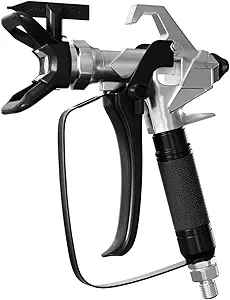
The Power of Speed: A Real-World Guide to Airless Paint Sprayers
If you have ever spent an entire weekend painstakingly rolling a single room only to find lap marks the next morning, you’ve probably wondered if there is a better way. Enter the airless paint sprayer. Once a tool reserved exclusively for professional contractors, these high-pressure machines have become increasingly accessible for DIYers who want to finish big projects in a fraction of the time.
But before you trade in your rollers for a spray gun, it is important to understand what makes airless technology different and how to handle it safely.
How Airless Spraying Actually Works
The name “airless” is the biggest clue to how these machines operate. Unlike traditional HVLP (High Volume, Low Pressure) sprayers that use a blast of air to carry the paint, airless sprayers use a powerful hydraulic or electric pump to force the paint through a tiny nozzle at incredibly high pressure—often up to 3000 PSI.
This pressure “atomizes” the paint into a fine mist. Because there is no air mixed in, the paint hits the surface with more force and builds a thicker, more uniform coat in a single pass. It is essentially like a high-pressure garden hose, but for paint.
Why Enthusiasts are Making the Switch
The primary reason anyone buys an airless sprayer is speed. If you are painting a long garden fence, a home exterior, or a multi-room interior, an airless sprayer can help you finish in hours what would take days with a brush.
- No Thinning Required: One of the best perks is that these pumps are powerful enough to spray heavy latex paints and primers straight from the bucket. No more standing around adding water and stirring.
- Flawless Finish: When done correctly, an airless sprayer leaves a glass-smooth finish with zero brush marks or roller textures (the dreaded “orange peel” look).
- Deep Coverage: The high-pressure mist reaches into the tiny nooks and crannies of textured surfaces like brick, stucco, or popcorn ceilings that rollers often miss.
The Learning Curve: Respect the Pressure
While the speed is addictive, airless sprayers are serious tools that require respect. Because the paint is under such extreme pressure, you have to be mindful of a few things:
- Overspray is Real: Airless sprayers create a lot of “paint dust.” If you are working indoors, you must be meticulous about masking off windows, floors, and furniture. If you are outdoors, keep an eye on the wind—you don’t want your neighbor’s car to end up with a fresh coat of “eggshell white.”
- Injection Hazard: This is the most important safety rule. Never, ever put your finger in front of the spray tip. The pressure is high enough to inject paint directly through your skin, which is a serious medical emergency. Always use the trigger lock when you aren’t actively spraying.
- Technique Matters: To get that perfect finish, you need to keep the gun about 10 to 12 inches from the surface and move your whole arm in a steady, straight line. If you pivot your wrist, you’ll end up with uneven “fans” of paint.
Maintenance and Longevity
An airless sprayer is an investment, and like any motor-driven tool, it needs care. The biggest enemy of a sprayer is dried paint inside the pump or hose.
Most modern home-use models (like the popular Graco Magnum or Titan series) include a garden hose adapter. This allows you to flush the entire system with water in about 10 to 15 minutes. If you are using oil-based paints, you’ll need to flush with mineral spirits. Always store your sprayer with a “pump armor” or storage fluid to prevent the internal valves from sticking or rusting during the off-season.
Is It Right for Your Project?
If you are just painting a single piece of furniture or a small bathroom, the setup and cleanup time of an airless sprayer might not be worth it. However, if you are looking at a project that covers hundreds of square feet, the airless sprayer is a total game-changer. It turns the “labor” of painting into a satisfying, high-speed transformation.