
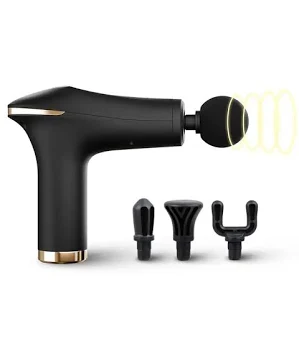
In 2026, massage guns (also known as percussion massagers) have evolved from niche athlete tools to essential home recovery devices. They work by delivering rapid, concentrated pulses deep into the muscle tissue, which increases blood flow and interrupts pain signals sent to the brain.
Here is the 2026 guide to finding the right massage gun for deep tissue relief.
Top-Rated Models for 2026
The market this year is split between high-amplitude “heavy hitters” and innovative thermal models.
| Model | Best For | Standout 2026 Feature |
|---|---|---|
| Therabody Theragun PRO Plus | Professional / Elite | Includes Near-Infrared LED light and built-in heat therapy. |
| Hyperice Hypervolt 2 Pro | Power Users | Removable battery and a digital dial for 5 precise speed settings. |
| Ekrin B37 | Best Deep Tissue Value | High stall force (50+ lbs), meaning it won’t stop when you press hard. |
| Homedics Pro Physio | Temperature Therapy | Features a head that can freeze for cold therapy or heat up to 47°C. |
| Bob and Brad Q2 Mini | Travel / Gym Bag | Tiny but surprisingly high 7mm-12mm amplitude for its size. |
Understanding the Technical Specs
When shopping for “Deep Tissue” specifically, these three metrics are more important than the number of attachments:
- Amplitude (Depth): This is how far the head travels back and forth. For true deep tissue, look for 12mm to 16mm. Budget models often hover around 8mm, which feels more like a surface vibration.
- Stall Force: This is the amount of pressure you can apply before the motor stops. If you have thick muscles (quads/glutes), you need a stall force of at least 30–40 lbs to get deep into the tissue without the gun “stalling.”
- Percussions Per Minute (PPM): Most 2026 models range from 1,750 to 3,200 PPM. Higher speeds are better for warming up muscles, while lower speeds with high pressure are better for breaking up knots.
How to Use Safely (The 20-Second Rule)
To avoid bruising or nerve irritation, follow these standard 2026 usage guidelines:
- Avoid the “Bony” Parts: Never use a massage gun directly on the spine, neck, joints, or shins. Stick to the “meaty” parts of the muscle.
- Keep it Moving: Do not hold the gun in one spot for more than 20 seconds. Glide it slowly along the muscle fibers at a rate of about 1 inch per second.
- Float, Don’t Push: Let the device’s percussion do the work. You don’t need to lean your body weight into it; “floating” the head on the surface is usually enough for deep relief.
- Hydrate: Percussive therapy helps flush metabolic waste (like lactic acid) out of the muscles. Drinking water afterward helps your system process this waste more effectively.
When NOT to Use a Massage Gun
Do not use these devices on fresh injuries (sprains/strained muscles), areas with numbness, or over broken skin. If you have chronic conditions like fibromyalgia or are on blood thinners, consult a professional before use.