
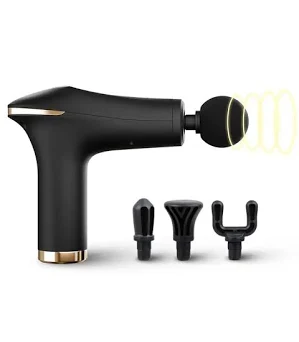
Deep Relief: A Guide to Professional Deep Tissue Massage Guns
When it comes to muscle recovery, not all massage guns are created equal. While a basic model might provide a pleasant surface-level vibration, a Professional Deep Tissue Massage Gun is designed for “percussive therapy.” This means it delivers rapid, concentrated pulses that reach deep into the muscle fibers to break up knots, increase blood flow, and accelerate recovery.
If you are a serious athlete, someone dealing with chronic tension, or simply looking for the best in home-recovery technology, here is what sets professional models apart.
The Three Pillars of “Professional” Power
To be considered a professional-grade deep tissue tool, a massage gun must excel in these three technical areas:
1. Amplitude (Stroke Depth)
This is the distance the massage head travels back and forth.
- Standard models: Usually offer 8mm to 10mm of travel.
- Professional models: Typically offer 12mm to 16mm. This extra depth is what allows the device to punch through the surface and reach the deeper layers of the muscle and fascia.
2. Stall Force
Stall force is the amount of pressure you can apply before the motor stops.
- Budget guns: May stall with only 15–20 lbs of pressure.
- Professional guns: Often boast a stall force of 40 to 60 lbs. This is crucial for deep tissue work on large muscle groups like the glutes or quads, where you need to lean into the device to get results.
3. Percussions Per Minute (PPM)
Speed isn’t everything, but versatility is. Professional models usually offer a range from 1,750 to 3,200 PPM. Lower speeds are better for warming up or sensitive areas, while higher speeds are designed to “numb” pain and release stubborn trigger points.
Essential Attachments for Every Muscle
A professional kit usually comes with several specialized heads. Using the right one is the difference between relief and discomfort:
- The Ball (All-Rounder): Best for large muscle groups like the chest, back, and glutes.
- The Bullet (Targeted): Specifically for “knots” and trigger points. Use it sparingly on highly localized spots.
- The Fork (Spine/Achilles): Shaped to straddle the bone. Perfect for the muscles running along your spine or around your ankles.
- The Flat Head (Surface): Great for dense muscles like the quads where you want to cover more surface area without a pointed impact.
- The Wedge (Scraping): Ideal for “flushing” lactic acid out of the shoulder blades or IT bands.
Pro Tips for Safe Use
Using a high-powered tool incorrectly can lead to bruising or inflammation. Follow these professional guidelines:
- Float, Don’t Push: You don’t need to jam the gun into your skin. Let the 16mm amplitude do the work. Simply “float” the device over the muscle.
- Target Muscles Only: Never use a deep tissue gun on bones (like your kneecap or spine), joints, or the front of your neck where major arteries are located.
- The Two-Minute Rule: Avoid spending more than 2 minutes on a single muscle group. Over-massaging can actually cause micro-tears in the tissue.
- Start Low: Always start on the lowest speed setting to let your nervous system adjust before cranking up the power.
Top Models to Consider in 2026
If you are looking for the gold standard, these models currently lead the professional market:
- Therabody Theragun PRO Plus: Known for its signature triangular grip and 16mm amplitude.
- Hyperice Hypervolt 2 Pro: Features a digital dial and is favored for being quieter than the Theragun.
- Ekrin Athletics B37S: A top-tier value option with an impressive 56-lb stall force.
Conclusion
A professional deep tissue massage gun is an investment in your physical longevity. It bridges the gap between expensive weekly massage appointments and basic at-home stretching. By understanding the balance of amplitude and stall force, you can choose a tool that doesn’t just vibrate on your skin, but actually changes the way your muscles feel and perform.